3. Generators and Iterators
By Bernd Klein. Last modified: 20 Mar 2024.
Introduction

What is an iterator? Iterators are objects that can be iterated over like we do in a for loop. We can also say that an iterator is an object, which returns data, one element at a time. That is, they do not do any work until we explicitly ask for their next item. They work on a principle, which is known in computer science as lazy evaluation. Lazy evaluation is an evaluation strategy which delays the evaluation of an expression until its value is really needed. Due to the laziness of Python iterators, they are a great way to deal with infinity, i.e. iterables which can iterate for ever. You can hardly find Python programs that are not teaming with iterators.
Iterators are a fundamental concept of Python. You already learned in your first Python programs that you can iterate over container objects such as lists and strings. To do this, Python creates an iterator version of the list or string. In this case, an iterator can be seen as a pointer to a container, which enables us to iterate over all the elements of this container. An iterator is an abstraction, which enables the programmer to access all the elements of an iterable object (a set, a string, a list etc.) without any deeper knowledge of the data structure of this object.
Generators are a special kind of function, which enable us to implement or generate iterators.
Mostly, iterators are implicitly used, like in the for-loop of Python. We demonstrate this in the following example. We are iterating over a list, but you shouldn't be mistaken: A list is not an iterator, but it can be used like an iterator:
cities = ["Paris", "Berlin", "Hamburg",
          "Frankfurt", "London", "Vienna",
          "Amsterdam", "Den Haag"]
for location in cities:
    print("location: " + location)
OUTPUT:
location: Paris
location: Berlin
location: Hamburg
location: Frankfurt
location: London
location: Vienna
location: Amsterdam
location: Den Haag
What is really going on when a for loop is executed? The function 'iter' is applied to the object following the 'in' keyword, e.g. for i in o:. Two cases are possible: o is either iterable or not. If o is not iterable, an exception will be raised, saying that the type of the object is not iterable. On the other hand, if o is iterable the call iter(o) will return an iterator, let us call it iterator_obj The for loop uses this iterator to iterate over the object o by using the next method. The for loop stops when next(iterator_obj) is exhausted, which means it returns a StopIteration exception. We demonstrate this behaviour in the following code example:
expertises = ["Python Beginner",
              "Python Intermediate",
              "Python Proficient",
              "Python Advanced"]
expertises_iterator = iter(expertises)
print("Calling 'next' for the first time: ", next(expertises_iterator))
print("Calling 'next' for the second time: ", next(expertises_iterator))
OUTPUT:
Calling 'next' for the first time:  Python Beginner
Calling 'next' for the second time:  Python Intermediate
We could have called next two more times, but after this we will get a StopIteration Exception.
We can simulate this iteration behavior of the for loop in a while loop: You might have noticed that there is something missing in our program: We have to catch the "Stop Iteration" exception:
other_cities = ["Strasbourg", "Freiburg", "Stuttgart",
                "Vienna / Wien", "Hannover", "Berlin",
                "Zurich"]

city_iterator = iter(other_cities)
while city_iterator:
    try:
        city = next(city_iterator)
        print(city)
    except StopIteration:
        break
OUTPUT:
Strasbourg
Freiburg
Stuttgart
Vienna / Wien
Hannover
Berlin
Zurich
The sequential base types as well as the majority of the classes of the standard library of Python support iteration. The dictionary data type dict supports iterators as well. In this case the iteration runs over the keys of the dictionary:
capitals = {
    "France":"Paris",
    "Netherlands":"Amsterdam",
    "Germany":"Berlin",
    "Switzerland":"Bern",
    "Austria":"Vienna"}

for country in capitals:
     print("The capital city of " + country + " is " + capitals[country])
OUTPUT:
The capital city of France is Paris
The capital city of Netherlands is Amsterdam
The capital city of Germany is Berlin
The capital city of Switzerland is Bern
The capital city of Austria is Vienna
Off-topic: Some readers may be confused to learn from our example that the capital of the Netherlands is not Den Haag (The Hague) but Amsterdam. Amsterdam is the capital of the Netherlands according to the constitution, even though the Dutch parliament and the Dutch government are situated in The Hague, as well as the Supreme Court and the Council of State.
Live Python training

Enjoying this page? We offer live Python training courses covering the content of this site.
See our Python training courses
Implementing an Iterator as a Class
One way to create iterators in Python is defining a class which implements the methods __init__ and __next__. We show this by implementing a class cycle, which can be used to cycle over an iterable object forever. In other words, an instance of this class returns the element of an iterable until it is exhausted. Then it repeats the sequence indefinitely.
class Cycle(object):

    def __init__(self, iterable):
        self.iterable = iterable
        self.iter_obj = iter(iterable)

    def __iter__(self):
        return self

    def __next__(self):
        while True:
            try:
                next_obj = next(self.iter_obj)
                return next_obj
            except StopIteration:
                self.iter_obj = iter(self.iterable)


x = Cycle("abc")

for i in range(10):
    print(next(x), end=", ")
OUTPUT:
a, b, c, a, b, c, a, b, c, a,
Even though the object-oriented approach to creating an iterator may be very interesting, this is not the pythonic method.
The usual and easiest way to create an iterator in Python consists in using a generator function. You will learn this in the following chapter.
Generators
On the surface, generators in Python look like functions, but there is both a syntactic and a semantic difference. One distinguishing characteristic is the yield statements. The yield statement turns a functions into a generator. A generator is a function which returns a generator object. This generator object can be seen like a function which produces a sequence of results instead of a single object. This sequence of values is produced by iterating over it, e.g. with a for loop. The values, on which can be iterated, are created by using the yield statement. The value created by the yield statement is the value following the yield keyword. The execution of the code stops when a yield statement is reached. The value behind the yield will be returned. The execution of the generator is interrupted now. As soon as "next" is called again on the generator object, the generator function will resume execution right after the yield statement in the code, where the last call is made. The execution will continue in the state in which the generator was left after the last yield. In other words, all the local variables still exist, because they are automatically saved between calls. This is a fundamental difference to functions: functions always start their execution at the beginning of the function body, regardless of where they had left in previous calls. They don't have any static or persistent values. There may be more than one yield statement in the code of a generator or the yield statement might be inside the body of a loop. If there is a return statement in the code of a generator, the execution will stop with a StopIteration exception error when this code is executed by the Python interpreter. The word "generator" is sometimes ambiguously used to mean both the generator function itself and the objects which are generated by a generator.
Everything which can be done with a generator can also be implemented with a class based iterator as well. However,
the crucial advantage of generators consists in automatically creating the methods __iter__() and next().
Generators provide a very neat way of producing data which is huge or even infinite.
The following is a simple example of a generator, which is capable of producing various city names.
It's possible to create a generator object with this generator, which generates all the city names, one after the other.
def city_generator():
    yield "Hamburg"
    yield "Konstanz"
    yield "Berlin"
    yield "Zurich"
    yield "Schaffhausen"
    yield "Stuttgart"
We created an iterator by calling city_generator():
city = city_generator()
print(next(city))
OUTPUT:
Hamburg
print(next(city))
OUTPUT:
Konstanz
print(next(city))
OUTPUT:
Berlin
print(next(city))
OUTPUT:
Zurich
print(next(city))
OUTPUT:
Schaffhausen
print(next(city))
OUTPUT:
Stuttgart
print(next(city))
OUTPUT:
---------------------------------------------------------------------------
StopIteration                             Traceback (most recent call last)
Cell In[14], line 1
----> 1 print(next(city))

StopIteration:
As we can see, we have generated an iterator city in the interactive shell. Every call of the method next(city) returns another city. After the last city, i.e. Stuttgart, has been created, another call of next(city) raises an exception, saying that the iteration has stopped, i.e. StopIteration.
"Can we send a reset to an iterator?" is a frequently asked question, so that it can start the iteration all over again. There is no reset, but it's possible to create another generator. This can be done e.g. by using the statement "city = city_generator()" again.
Though at the first sight the yield statement looks like the return statement of a function, we can see in this example that there is a huge difference. If we had a return statement instead of a yield in the previous example, it would be a function. But this function would always return the first city "Hamburg" and never any of the other cities, i.e. "Konstanz", "Berlin", "Zurich", "Schaffhausen", and "Stuttgart"
Live Python training
Enjoying this page? We offer live Python training courses covering the content of this site.
Upcoming online Courses
See our Python training courses
Method of Operation
As we have elaborated in the introduction of this chapter, the generators offer a comfortable method to generate iterators, and that's why they are called generators.
Method of working:
- A generator is called like a function. Its return value is an iterator, i.e. a generator object. The code of the generator will not be executed at this stage.
- The iterator can be used by calling the next method. The first time the execution starts like a function, i.e. the first line of code within the body of the iterator. The code is executed until a yield statement is reached.
- yield returns the value of the expression, which is following the keyword yield. This is like a function, but Python keeps track of the position of this yield and the state of the local variables is stored for the next call. At the next call, the execution continues with the statement following the yield statement and the variables have the same values as they had in the previous call.
- The iterator is finished, if the generator body is completely worked through or if the program flow encounters a return statement without a value.
We will illustrate this behaviour in the following example. The generator count creates an iterator which creates a sequence of values by counting from the start value 'firstval' and using 'step' as the increment for counting:
def count(firstval=0, step=1):
    x = firstval
    while True:
        yield x
        x += step

counter = count() # count will start with 0
for i in range(10):
    print(next(counter), end=", ")

start_value = 2.1
stop_value = 0.3
print("\nNew counter:")
counter = count(start_value, stop_value)
for i in range(10):
    new_value = next(counter)
    print(f"{new_value:2.2f}", end=", ")
OUTPUT:
0, 1, 2, 3, 4, 5, 6, 7, 8, 9,
New counter:
2.10, 2.40, 2.70, 3.00, 3.30, 3.60, 3.90, 4.20, 4.50, 4.80,
Fibonacci as a Generator:
The Fibonacci sequence is named after Leonardo of Pisa, who was known as Fibonacci (a contraction of filius Bonacci, "son of Bonaccio"). In his textbook Liber Abaci, which appeared in the year 1202) he had an exercise about the rabbits and their breeding: It starts with a newly-born pair of rabbits, i.e. a male and a female. It takes one month until they can mate. At the end of the second month the female gives birth to a new pair of rabbits. Now let's suppose that every female rabbit will bring forth another pair of rabbits every month after the end of the first month. We have to mention that Fibonacci's rabbits never die. They question is how large the population will be after a certain period of time.
This produces a sequence of numbers: 0, 1, 1, 2, 3, 5, 8, 13
This sequence can be defined in mathematical terms like this:
$F_n = F_{n - 1} + F_{n - 2}$ with the seed values: $F_0 = 0$ and $F_1 = 1$
def fibonacci(n):
    """ A generator for creating the Fibonacci numbers """
    a, b, counter = 0, 1, 0
    while True:
        if (counter > n):
            return
        yield a
        a, b = b, a + b
        counter += 1
f = fibonacci(5)
for x in f:
    print(x, " ", end="") #
print()
OUTPUT:
0 1 1 2 3 5
The generator above can be used to create the first n Fibonacci numbers separated by blanks, or better (n+1) numbers because the 0th number is also included. In the next example we present a version which is capable of returning an endless iterator. We have to take care when we use this iterator that a termination criterion is used:
def fibonacci():
    """Generates an infinite sequence of Fibonacci numbers on demand"""
    a, b = 0, 1
    while True:
        yield a
        a, b = b, a + b

f = fibonacci()

counter = 0
for x in f:
    print(x, " ", end="")
    counter += 1
    if (counter > 10):
        break
print()
OUTPUT:
0 1 1 2 3 5 8 13 21 34 55
Using a 'return' in a Generator
Since Python 3.3, generators can also use return statements, but a generator still needs at least one yield statement to be a generator! A return statement inside of a generator is equivalent to raise StopIteration()
Let's have a look at a generator in which we raise StopIteration:
def gen():
    yield 1
    raise StopIteration(42)
    yield 2
g = gen()
next(g)
OUTPUT:
1
next(g)
OUTPUT:
---------------------------------------------------------------------------
StopIteration                             Traceback (most recent call last)
Cell In[18], line 3, in gen()
      2 yield 1
----> 3 raise StopIteration(42)
      4 yield 2

StopIteration: 42

The above exception was the direct cause of the following exception:

RuntimeError                              Traceback (most recent call last)
Cell In[21], line 1
----> 1 next(g)

RuntimeError: generator raised StopIteration
We demonstrate now that return is "nearly" equivalent to raising the 'StopIteration' exception.
def gen():
    yield 1
    return 42
    yield 2
g = gen()
next(g)
OUTPUT:
1
next(g)
OUTPUT:
---------------------------------------------------------------------------
StopIteration                             Traceback (most recent call last)
Cell In[24], line 1
----> 1 next(g)

StopIteration: 42
Live Python training
Enjoying this page? We offer live Python training courses covering the content of this site.
See our Python training courses
send Method /Coroutines
Generators can not only send objects but also receive objects. Sending a message, i.e. an object, into the generator can be achieved by applying the send method to the generator object. Be aware of the fact that send both sends a value to the generator and returns the value yielded by the generator. We will demonstrate this behavior in the following simple example of a coroutine:
def simple_coroutine():
    print("coroutine has been started!")
    while True:
        x = yield "foo"
        print("coroutine received: ", x)


cr = simple_coroutine()
cr
OUTPUT:
<generator object simple_coroutine at 0x7fb6682006c0>
next(cr)
OUTPUT:
coroutine has been started!
'foo'
ret_value = cr.send("Hi")
print("'send' returned: ", ret_value)
OUTPUT:
coroutine received:  Hi
'send' returned:  foo
We had to call next on the generator first, because the generator needed to be started. Using send to a generator which hasn't been started leads to an exception.
To use the send method, the generator must wait for a yield statement so that the data sent can be processed or assigned to the variable on the left. What we haven't said so far: A next call also sends and receives. It always sends a None object. The values sent by "next" and "send" are assigned to a variable within the generator: this variable is called new_counter_val in the following example.
The following example modifies the generator 'count' from the previous subchapter by adding a send feature.
def count(firstval=0, step=1):
    counter = firstval
    while True:
        new_counter_val = yield counter
        if new_counter_val is None:
            counter += step
        else:
            counter = new_counter_val

start_value = 2.1
stop_value = 0.3
counter = count(start_value, stop_value)
for i in range(10):
    new_value = next(counter)
    print(f"{new_value:2.2f}", end=", ")

print("set current count value to another value:")
counter.send(100.5)
for i in range(10):
    new_value = next(counter)
    print(f"{new_value:2.2f}", end=", ")
OUTPUT:
2.10, 2.40, 2.70, 3.00, 3.30, 3.60, 3.90, 4.20, 4.50, 4.80, set current count value to another value:
100.80, 101.10, 101.40, 101.70, 102.00, 102.30, 102.60, 102.90, 103.20, 103.50,
Radio Station as an Example

from random import choice

def song_generator(song_list):
    new_song = None
    while True:
        if new_song != None:
            if new_song not in song_list:
                song_list.append(new_song)
            new_song = yield new_song
        else:
            new_song = yield choice(song_list)

songs = ["Her Şeyi Yak - Sezen Aksu",
         "Bluesette - Toots Thielemans",
         "Six Marimbas - Steve Reich",
         "Riverside - Agnes Obel",
         "Not for Radio - Nas",
         "What's going on - Taste",
         "On Stream - Nils Petter Molvær",
         "La' Inta Habibi - Fayrouz",
         "Ik Leef Niet Meer Voor Jou - Marco Borsato",
         "Δέκα λεπτά - Αθηνά Ανδρεάδη"]
radio_program = song_generator(songs)
next(radio_program)
OUTPUT:
"What's going on - Taste"
for i in range(3):
    print(next(radio_program))
OUTPUT:
Riverside - Agnes Obel
Riverside - Agnes Obel
Riverside - Agnes Obel
radio_program.send("Distorted Angels - Archive")
OUTPUT:
'Distorted Angels - Archive'
songs
OUTPUT:
['Her Şeyi Yak - Sezen Aksu',
 'Bluesette - Toots Thielemans',
 'Six Marimbas - Steve Reich',
 'Riverside - Agnes Obel',
 'Not for Radio - Nas',
 "What's going on - Taste",
 'On Stream - Nils Petter Molvær',
 "La' Inta Habibi - Fayrouz",
 'Ik Leef Niet Meer Voor Jou - Marco Borsato',
 'Δέκα λεπτά - Αθηνά Ανδρεάδη',
 'Distorted Angels - Archive']
So far, we could change the behavior of the song interator by sending a new song, i.e. a title plus the performer. We will extend the generator now. We make it possible to send a new song list. We have to send a tuple to the new iterator, either a tuple:
(
("-songlist-",
from random import choice
def song_generator(song_list):
    new_song = None
    while True:
        if new_song != None:
            if new_song[0] == "-songlist-":
                song_list = new_song[1]
                new_song = yield choice(song_list)
            else:
                title, performer = new_song
                new_song = title + " - " + performer
                if new_song not in song_list:
                    song_list.append(new_song)
                new_song = yield new_song
        else:
            new_song = yield choice(song_list)
songs1 = ["Après un Rêve - Gabriel Fauré"
         "On Stream - Nils Petter Molvær",
         "Der Wanderer Michael - Michael Wollny",
         "Les barricades mystérieuses - Barbara Thompson",
         "Monday - Ludovico Einaudi"]

songs2 = ["Dünyadan Uzak - Pinhani",
          "Again - Archive",
          "If I had a Hear - Fever Ray"
          "Every you, every me - Placebo",
          "Familiar - Angnes Obel"]
radio_prog = song_generator(songs1)
for i in range(5):
    print(next(radio_prog))
OUTPUT:
Après un Rêve - Gabriel FauréOn Stream - Nils Petter Molvær
Après un Rêve - Gabriel FauréOn Stream - Nils Petter Molvær
Der Wanderer Michael - Michael Wollny
Monday - Ludovico Einaudi
Les barricades mystérieuses - Barbara Thompson
We change the radio program now by exchanging the song list:
radio_prog.send(("-songlist-", songs2))
OUTPUT:
'Dünyadan Uzak - Pinhani'
for i in range(5):
    print(next(radio_prog))
OUTPUT:
If I had a Hear - Fever RayEvery you, every me - Placebo
Again - Archive
Again - Archive
Again - Archive
If I had a Hear - Fever RayEvery you, every me - Placebo
The throw Method
The throw() method raises an exception at the point where the generator was paused, and returns the next value yielded by the generator. It raises StopIteration if the generator exits without yielding another value. The generator has to catch the passed-in exception, otherwise the exception will be propagated to the caller.
The infinite loop of our count generator from our previous example keeps yielding the elements of the sequential data, but we don't have any information about the index or the state of the variables of "counter". We can get this information, i.e. the state of the variables in count by throwing an exception with the throw method. We catch this exception inside of the generator and print the state of the values of "count":
def count(firstval=0, step=1):
    counter = firstval
    while True:
        try:
            new_counter_val = yield counter
            if new_counter_val is None:
                counter += step
            else:
                counter = new_counter_val
        except Exception:
            yield (firstval, step, counter)
In the following code block, we will show how to use this generator:
c = count()
for i in range(6):
    print(next(c))
print("Let us see what the state of the iterator is:")
state_of_count = c.throw(Exception)
print(state_of_count)
print("now, we can continue:")
for i in range(3):
    print(next(c))
OUTPUT:
0
1
2
3
4
5
Let us see what the state of the iterator is:
(0, 1, 5)
now, we can continue:
5
6
7
We can improve the previous example by defining our own exception class StateOfGenerator:
class StateOfGenerator(Exception):
     def __init__(self, message=None):
         self.message = message

def count(firstval=0, step=1):
    counter = firstval
    while True:
        try:
            new_counter_val = yield counter
            if new_counter_val is None:
                counter += step
            else:
                counter = new_counter_val
        except StateOfGenerator:
            yield (firstval, step, counter)
We can use the previous generator like this:
c = count()
for i in range(3):
    print(next(c))
print("Let us see what the state of the iterator is:")
i = c.throw(StateOfGenerator)
print(i)
print("now, we can continue:")
for i in range(3):
    print(next(c))
OUTPUT:
0
1
2
Let us see what the state of the iterator is:
(0, 1, 2)
now, we can continue:
2
3
4
Live Python training
Enjoying this page? We offer live Python training courses covering the content of this site.
See our Python training courses
yield from
"yield from" is available since Python 3.3!
The yield from <expr> statement can be used inside the body of a generator. <expr> has to be an expression evaluating to an iterable, from which an iterator will be extracted.
The iterator is run to exhaustion, i.e. until it encounters a StopIteration exception. This iterator yields and receives values to or from the caller of the generator, i.e. the one which contains the yield from statement.
We can learn from the following example by looking at the two generators 'gen1' and 'gen2' that the yield from from gen2 are substituting the for loops of 'gen1':
def gen1():
    for char in "Python":
        yield char
    for i in range(5):
        yield i

def gen2():
    yield from "Python"
    yield from range(5)

g1 = gen1()
g2 = gen2()
print("g1: ", end=", ")
for x in g1:
    print(x, end=", ")
print("\ng2: ", end=", ")
for x in g2:
    print(x, end=", ")
print()
OUTPUT:
g1: , P, y, t, h, o, n, 0, 1, 2, 3, 4,
g2: , P, y, t, h, o, n, 0, 1, 2, 3, 4,
We can see from the output that both generators are the same.
The benefit of a yield from statement can be seen as a way to split a generator into multiple generators. That's what we have done in our previous example and we will demonstrate this more explicitely in the following example:
def cities():
    for city in ["Berlin", "Hamburg", "Munich", "Freiburg"]:
        yield city

def squares():
    for number in range(10):
        yield number ** 2

def generator_all_in_one():
    for city in cities():
        yield city
    for number in squares():
        yield number

def generator_splitted():
    yield from cities()
    yield from squares()

lst1 = [el for el in generator_all_in_one()]
lst2 = [el for el in generator_splitted()]
print(lst1 == lst2)
OUTPUT:
True
The previous code returns True because the generators generator_all_in_one and generator_splitted yield the same elements. This means that if the <expr> from the yield from is another generator, the effect is the same as if the body of the sub‐generator were inlined at the point of the yield from statement. Furthermore, the subgenerator is allowed to execute a return statement with a value, and that value becomes the value of the yield from expression. We demonstrate this with the following little script:
def subgenerator():
    yield 1
    return 42

def delegating_generator():
    x = yield from subgenerator()
    print(x)

for x in delegating_generator():
    print(x)
OUTPUT:
1
42
The full semantics of the yield from expression is described in six points in "PEP 380 -- Syntax for Delegating to a Subgenerator" in terms of the generator protocol:
- Any values that the iterator yields are passed directly to the caller.
- Any values sent to the delegating generator using send() are passed directly to the iterator. If the sent value is None, the iterator's next() method is called. If the sent value is not None, the iterator's send() method is called. If the call raises StopIteration, the delegating generator is resumed. Any other exception is propagated to the delegating generator.
- Exceptions other than GeneratorExit thrown into the delegating generator are passed to the throw() method of the iterator. If the call raises StopIteration, the delegating generator is resumed. Any other exception is propagated to the delegating generator.
- If a GeneratorExit exception is thrown into the delegating generator, or the close() method of the delegating generator is called, then the close() method of the iterator is called if it has one. If this call results in an exception, it is propagated to the delegating generator. Otherwise, GeneratorExit is raised in the delegating generator.
- The value of the yield from expression is the first argument to the StopIteration exception raised by the iterator when it terminates.
- return expr in a generator causes StopIteration(expr) to be raised upon exit from the generator.
Recursive Generators
The following example is a generator to create all the permutations of a given list of items.
For those who don't know what permutations are, we have a short introduction:
Formal Definition: The term "permutation" stems from the latin verb "permutare" which means A permutation is a rearrangement of the elements of an ordered list. In other words: Every arrangement of n elements is called a permutation.
In the following lines we show you all the permutations of the letter a, b and c:
a b c
a c b
b a c
b c a
c a b
c b a
The number of permutations on a set of n elements is given by n!
n! = n(n-1)(n-2) ... 2 * 1
n! is called the factorial of n.
The permutation generator can be called with an arbitrary list of objects. The iterator returned by this generator generates all the possible permutations:
def permutations(items):
    n = len(items)
    if n==0: yield []
    else:
        for i in range(len(items)):
            for cc in permutations(items[:i]+items[i+1:]):
                yield [items[i]]+cc

for p in permutations(['r','e','d']): print(''.join(p))
for p in permutations(list("game")): print(''.join(p) + ", ", end="")
OUTPUT:
red
rde
erd
edr
dre
der
game, gaem, gmae, gmea, geam, gema, agme, agem, amge, ameg, aegm, aemg, mgae, mgea, mage, maeg, mega, meag, egam, egma, eagm, eamg, emga, emag,
The previous example can be hard to understand for newbies. Like always, Python offers a convenient solution. We need the module itertools for this purpose. Itertools is a very handy tool to create and operate on iterators.
Creating permutations with itertools:
import itertools
perms = itertools.permutations(['r','e','d'])
list(perms)
OUTPUT:
[('r', 'e', 'd'),
 ('r', 'd', 'e'),
 ('e', 'r', 'd'),
 ('e', 'd', 'r'),
 ('d', 'r', 'e'),
 ('d', 'e', 'r')]
The term "permutations" can sometimes be used in a weaker meaning. Permutations can denote in this weaker meaning a sequence of elements, where each element occurs just once, but without the requirement to contain all the elements of a given set. So in this sense (1,3,5,2) is a permutation of the set of digits {1,2,3,4,5,6}. We can build, for example, all the sequences of a fixed length k of elements taken from a given set of size n with k ≤ n.
These are are all the 3-permutations of the set {"a","b","c","d"}.
These atypical permutations are also known as sequences without repetition. By using this term we can avoid confusion with the term "permutation". The number of such k-permutations of n is denoted by $P_{n,k}$ and its value is calculated by the product:
$n · (n - 1) · … (n - k + 1)$
By using the factorial notation, the above mentioned expression can be written as:
$P_{n,k} = n! / (n - k)!$
A generator for the creation of k-permuations of n objects looks very similar to our previous permutations generator:
def k_permutations(items, n):
    if n==0:
        yield []
    else:
        for item in items:
            for kp in k_permutations(items, n-1):
                if item not in kp:
                    yield [item] + kp

for kp in k_permutations("abcd", 3):
    print(kp)
OUTPUT:
['a', 'b', 'c']
['a', 'b', 'd']
['a', 'c', 'b']
['a', 'c', 'd']
['a', 'd', 'b']
['a', 'd', 'c']
['b', 'a', 'c']
['b', 'a', 'd']
['b', 'c', 'a']
['b', 'c', 'd']
['b', 'd', 'a']
['b', 'd', 'c']
['c', 'a', 'b']
['c', 'a', 'd']
['c', 'b', 'a']
['c', 'b', 'd']
['c', 'd', 'a']
['c', 'd', 'b']
['d', 'a', 'b']
['d', 'a', 'c']
['d', 'b', 'a']
['d', 'b', 'c']
['d', 'c', 'a']
['d', 'c', 'b']
Live Python training
Enjoying this page? We offer live Python training courses covering the content of this site.
See our Python training courses
A Generator of Generators
The second generator of our Fibonacci sequence example generates an iterator, which can theoretically produce all the Fibonacci numbers, i.e. an infinite number. But you shouldn't try to produce all these numbers in a list with the following line.
list(fibonacci())
This will show you very fast the limits of your computer.
In most practical applications, we only need the first n elements of and other "endless" iterators. We can use another generator, in our example firstn, to create the first n elements of a generator generator:
def firstn(generator, n):
    g = generator()
    for i in range(n):
        yield next(g)
The following script returns the first 10 elements of the Fibonacci sequence:
def fibonacci():
    """ A Fibonacci number generator """
    a, b = 0, 1
    while True:
        yield a
        a, b = b, a + b

print(list(firstn(fibonacci, 10)))
OUTPUT:
[0, 1, 1, 2, 3, 5, 8, 13, 21, 34]
Exercises
Exercise 1
Write a generator which computes the running average.
Exercise 2
Write a generator frange, which behaves like range but accepts float values.
Exercise 3
- Write a generator
trange, which generates a sequence of time tuples from start to stop incremented by step. A time tuple is a 3-tuple of integers: (hours, minutes, seconds) So a call totrangemight look like this:
trange((10, 10, 10), (13, 50, 15), (0, 15, 12) )
Exercise 4
Write a version "rtrange" of the previous generator, which can receive messages to reset the start value.
Exercise 5
Write a program, using the newly written generator "trange", to create a file "times_and_temperatures.txt". The lines of this file contain a time in the format hh::mm::ss and random temperatures between 10.0 and 25.0 degrees. The times should be ascending in steps of 90 seconds starting with 6:00:00.
For example:
06:00:00 20.1
06:01:30 16.1
06:03:00 16.9
06:04:30 13.4
06:06:00 23.7
06:07:30 23.6
06:09:00 17.5
06:10:30 11.0
Exercise 6
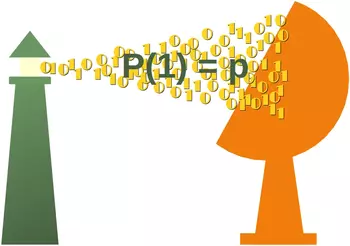
Write a generator with the name "random_ones_and_zeroes", which returns a bitstream, i.e. a zero or a one in every iteration. The probability p for returning a 1 is defined in a variable p. The generator will initialize this value to 0.5. In other words, zeroes and ones will be returned with the same probability.
Exercise 7
We wrote a class Cycle in the beginning of this chapter of our Python tutorial. Write a generator cycle performing the same task.
Exercise 8
Write a generator function which implements the $\pi$-series:
$\frac{\pi}{4} = \sum_{n=1}^{\infty} \frac{(-1)^{n+1}}{n}$
or
$\frac{\pi}{4} = 1 - \frac{1}{2} + \frac{1}{3} - \frac{1}{4} + \ldots$
Live Python training
Enjoying this page? We offer live Python training courses covering the content of this site.
See our Python training courses
Solutions to our Exercises
Solution to Exercise 1
def running_average():
    total = 0.0
    counter = 0
    average = None
    while True:
        term = yield average
        total += term
        counter += 1
        average = total / counter


ra = running_average()  # initialize the coroutine
next(ra)                # we have to start the coroutine
for value in [7, 13, 17, 231, 12, 8, 3]:
    out_str = "sent: {val:3d}, new average: {avg:6.2f}"
    print(out_str.format(val=value, avg=ra.send(value)))
OUTPUT:
sent:   7, new average:   7.00
sent:  13, new average:  10.00
sent:  17, new average:  12.33
sent: 231, new average:  67.00
sent:  12, new average:  56.00
sent:   8, new average:  48.00
sent:   3, new average:  41.57
Solution to Exercise 2
def frange(*args):
    """  dfgdg """
    startval = 0
    stepsize = 1
    if len(args) == 1:
        endval = args[0]
    elif len(args) == 2:
        startval, endval = args
    elif len(args) == 3:
        startval, endval, stepsize = args
    else:
        txt = "range expected at most 3 arguments, got " + len(args)
        raise TypeError(txt)

    value = startval
    factor = -1 if stepsize < 0 else 1
    while (value - endval) * (factor) < 0:
        yield value
        value += stepsize
Using frange may llok like this:
for i in frange(5.6):
    print(i, end=", ")
print()
for i in frange(0.3, 5.6):
    print(i, end=", ")
print()
for i in frange(0.3, 5.6, 0.8):
    print(i, end=", ")
print()
OUTPUT:
0, 1, 2, 3, 4, 5,
0.3, 1.3, 2.3, 3.3, 4.3, 5.3,
0.3, 1.1, 1.9000000000000001, 2.7, 3.5, 4.3, 5.1,
Solution to Exercise 3
%%writefile timerange.py


def trange(start, stop, step):
    """
    trange(stop) -> time as a 3-tuple (hours, minutes, seconds)
    trange(start, stop[, step]) -> time tuple

    start: time tuple (hours, minutes, seconds)
    stop: time tuple
    step: time tuple

    returns a sequence of time tuples from start to stop incremented by step
    """

    current = list(start)
    while current < list(stop):
        yield tuple(current)
        seconds = step[2] + current[2]
        min_borrow = 0
        hours_borrow = 0
        if seconds < 60:
            current[2] = seconds
        else:
            current[2] = seconds - 60
            min_borrow = 1
        minutes = step[1] + current[1] + min_borrow
        if minutes < 60:
            current[1] = minutes
        else:
            current[1] = minutes - 60
            hours_borrow = 1
        hours = step[0] + current[0] + hours_borrow
        if hours < 24:
            current[0] = hours
        else:
            current[0] = hours - 24
OUTPUT:
Writing timerange.py
from timerange import trange

for time in trange((10, 10, 10), (19, 53, 15), (1, 24, 12) ):
    print(time)
OUTPUT:
(10, 10, 10)
(11, 34, 22)
(12, 58, 34)
(14, 22, 46)
(15, 46, 58)
(17, 11, 10)
(18, 35, 22)
Solution to Exercise 4
%%writefile rtimerange.py

def rtrange(start, stop, step):
        """
        trange(stop) -> time as a 3-tuple (hours, minutes, seconds)
        trange(start, stop[, step]) -> time tuple

        start: time tuple (hours, minutes, seconds)
        stop: time tuple
        step: time tuple

        returns a sequence of time tuples from start to stop incremented by step

        The generator can be reset by sending a new "start" value.
        """

        current = list(start)
        while current < list(stop):
            new_start = yield tuple(current)
            if new_start != None:
                current = list(new_start)
                continue
            seconds = step[2] + current[2]
            min_borrow = 0
            hours_borrow = 0
            if seconds < 60:
                current[2] = seconds
            else:
                current[2] = seconds - 60
                min_borrow = 1
            minutes = step[1] + current[1] + min_borrow
            if minutes < 60:
                current[1] = minutes
            else:
                current[1] = minutes - 60
                hours_borrow = 1
            hours = step[0] + current[0] + hours_borrow
            if hours < 24:
                current[0] = hours
            else:
                current[0] = hours -24
OUTPUT:
Writing rtimerange.py
from rtimerange import rtrange


ts = rtrange((10, 10, 10), (17, 50, 15), (1, 15, 12) )
for _ in range(3):
    print(next(ts))

print(ts.send((8, 5, 50)))
for _ in range(3):
    print(next(ts))
OUTPUT:
(10, 10, 10)
(11, 25, 22)
(12, 40, 34)
(8, 5, 50)
(9, 21, 2)
(10, 36, 14)
(11, 51, 26)
Solution to Exercise 5
from timerange import trange
import random

fh = open("times_and_temperatures.txt", "w")

for time in trange((6, 0, 0), (23, 0, 0), (0, 1, 30) ):
    random_number = random.randint(100, 250) / 10
    lst = time + (random_number,)
    output = "{:02d}:{:02d}:{:02d} {:4.1f}\n".format(*lst)
    fh.write(output)
You can find further details and the mathematical background about this exercise in our chapter on Weighted Probabilities
Solution to Exercise 6
import random

def random_ones_and_zeros():
    p = 0.5
    while True:
        x = random.random()
        message = yield 1 if x < p else 0
        if message != None:
            p = message

x = random_ones_and_zeros()
next(x)  # we are not interested in the return value
for p in [0.2, 0.8]:
    print("\nWe change the probability to : " + str(p))
    x.send(p)
    for i in range(20):
        print(next(x), end=" ")
print()
OUTPUT:
We change the probability to : 0.2
0 0 0 0 0 1 0 1 1 1 0 0 0 1 0 1 0 0 0 0
We change the probability to : 0.8
1 1 1 1 1 1 1 0 1 1 1 1 1 1 1 1 1 1 1 1
Solution to Exercise 7
The "cycle" generator is part of the module 'itertools'. The following code is the implementation in itertools:
def cycle(iterable):
    # cycle('ABCD') --> A B C D A B C D A B C D ...
    saved = []
    for element in iterable:
        yield element
        saved.append(element)
    while saved:
        for element in saved:
              yield element

countries = ["Germany", "Switzerland", "Austria"]
country_iterator = cycle(countries)
for i in range(7):
    print(next(country_iterator))
OUTPUT:
Germany
Switzerland
Austria
Germany
Switzerland
Austria
Germany
Solution to Exercise 8
def pi_series():
    sum, i, j = 0, 1, 1
    while True:
        sum += j/i
        yield 4*sum
        i += 2
        j *= -1
Let's look at the first 20 values
stop_value = 20
counter = 0
for p in pi_series():
    print(p)
    if counter == stop_value:
        break
    counter += 1
OUTPUT:
4.0
2.666666666666667
3.466666666666667
2.8952380952380956
3.3396825396825403
2.9760461760461765
3.2837384837384844
3.017071817071818
3.2523659347188767
3.0418396189294032
3.232315809405594
3.058402765927333
3.2184027659273333
3.0702546177791854
3.208185652261944
3.079153394197428
3.200365515409549
3.0860798011238346
3.1941879092319425
3.09162380666784
3.189184782277596
The following generator function iterates over the elements generated by the provided generator function generator until the difference between consecutive elements falls below the specified epsilon value (eps). It yields each element as it iterates, and it terminates the iteration when the condition on the difference is met.
def iterate_eps(generator, eps):
    counter = 0
    previous = 0
    for p in generator():
        yield p
        if abs(previous - p) < eps:
            break
        previous = p
        counter += 1
for el in iterate(pi_series, eps=0.1):
    print(el)
OUTPUT:
4.0
2.666666666666667
3.466666666666667
2.8952380952380956
3.3396825396825403
2.9760461760461765
3.2837384837384844
3.017071817071818
3.2523659347188767
3.0418396189294032
3.232315809405594
3.058402765927333
3.2184027659273333
3.0702546177791854
3.208185652261944
3.079153394197428
3.200365515409549
3.0860798011238346
3.1941879092319425
3.09162380666784
3.189184782277596
Live Python training
Enjoying this page? We offer live Python training courses covering the content of this site.
Upcoming online Courses
See our Python training courses